
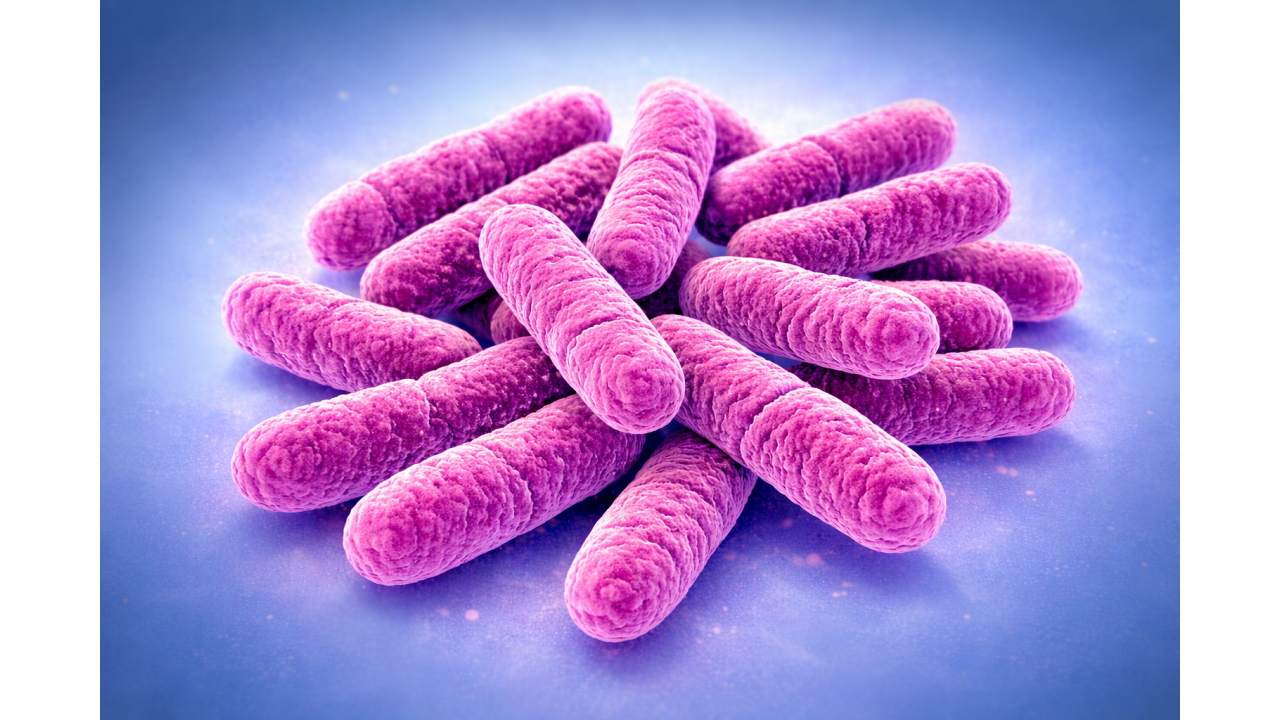
Lactobacillus rhamnosus – One of the Most Researched Probiotic Strains
Lactobacillus rhamnosus is one of the most extensively studied probiotic microorganisms in modern gastroenterology and immunology. It belongs to the group of lactic acid bacteria and naturally inhabits the human gastrointestinal tract.
Thanks to its resilience and ability to adhere to the intestinal lining, L. rhamnosus plays a key role in maintaining microbiota balance.
What is Lactobacillus rhamnosus?
Lactobacillus rhamnosus is a Gram-positive, facultative anaerobic bacterium that produces lactic acid through carbohydrate fermentation.
The most well-known and clinically researched strain is Lactobacillus rhamnosus GG (LGG), which has been the subject of hundreds of scientific publications.
Main Mechanisms of Action
1. Supports the intestinal barrier
Helps maintain epithelial cell stability and tight junction integrity, important for limiting increased intestinal permeability.
2. Competes with pathogenic microorganisms
Adheres to the intestinal mucosa and reduces colonization by potentially harmful bacteria.
3. Modulates immune response
Influences immune cell activity and supports a balanced inflammatory response.
4. Produces bioactive metabolites
Generates lactic acid and other compounds that create a favorable environment for beneficial bacteria.
Scientifically Supported Benefits
Clinical research associates Lactobacillus rhamnosus with:
-
Maintaining gut microbiota balance
-
Reducing the risk of antibiotic-associated diarrhea
-
Supporting individuals with irritable bowel syndrome
-
Improving digestive comfort
-
Supporting immune function
-
Influencing the gut–brain axis
Lactobacillus rhamnosus and Antibiotic Therapy
Antibiotics eliminate both pathogenic and beneficial bacteria.
L. rhamnosus is one of the most recommended strains during and after antibiotic therapy, as it supports microbiota restoration.
Role in Immune Health
Approximately 70% of immune cells are located in the intestinal lining.
L. rhamnosus supports:
-
Local immune response
-
Production of secretory IgA
-
Maintenance of anti-inflammatory balance
Synergy in PROBIOTIC 5
While Lactobacillus rhamnosus is powerful on its own, modern research suggests that multi-strain formulations provide broader benefits.
PROBIOTIC 5 combines:
-
Bacillus coagulans – a spore-forming, acid-resistant strain
-
Lactobacillus rhamnosus – supports the intestinal barrier
-
Lactobacillus acidophilus – aids digestion
-
Bifidobacterium bifidum – supports gut environment balance
-
Bifidobacterium animalis subsp. lactis – promotes regularity and immune balance
This synergistic formula provides:
✔ Support for both small and large intestine
✔ Enhanced microbiota recovery
✔ Multi-level immune support
✔ Broader microbial diversity
In today’s lifestyle context—stress, antibiotics, and processed diets—a multi-strain probiotic approach offers a more comprehensive strategy for gut health.
Leave a Comment