
Dehydration, Electrolyte Imbalance and Mitochondrial Dysfunction in Osteoarthritis
A New Perspective on Osteoarthritis
Osteoarthritis has traditionally been viewed as a degenerative disease primarily associated with mechanical wear and tear of joint cartilage. However, modern scientific research shows that the development of the disease is far more complex and involves metabolic, biochemical and cellular processes.
Among the factors that may play an important role in joint degeneration are:
-
chronic dehydration
-
electrolyte imbalance
-
impaired microcirculation
-
mitochondrial dysfunction
-
oxidative stress
These processes can affect the function of the cells that build and maintain joint cartilage – chondrocytes – and gradually accelerate the destruction of joint tissue.
The Importance of Water for Joint Cartilage
Articular cartilage is a specialized connective tissue that allows smooth joint movement and absorbs mechanical stress during movement.
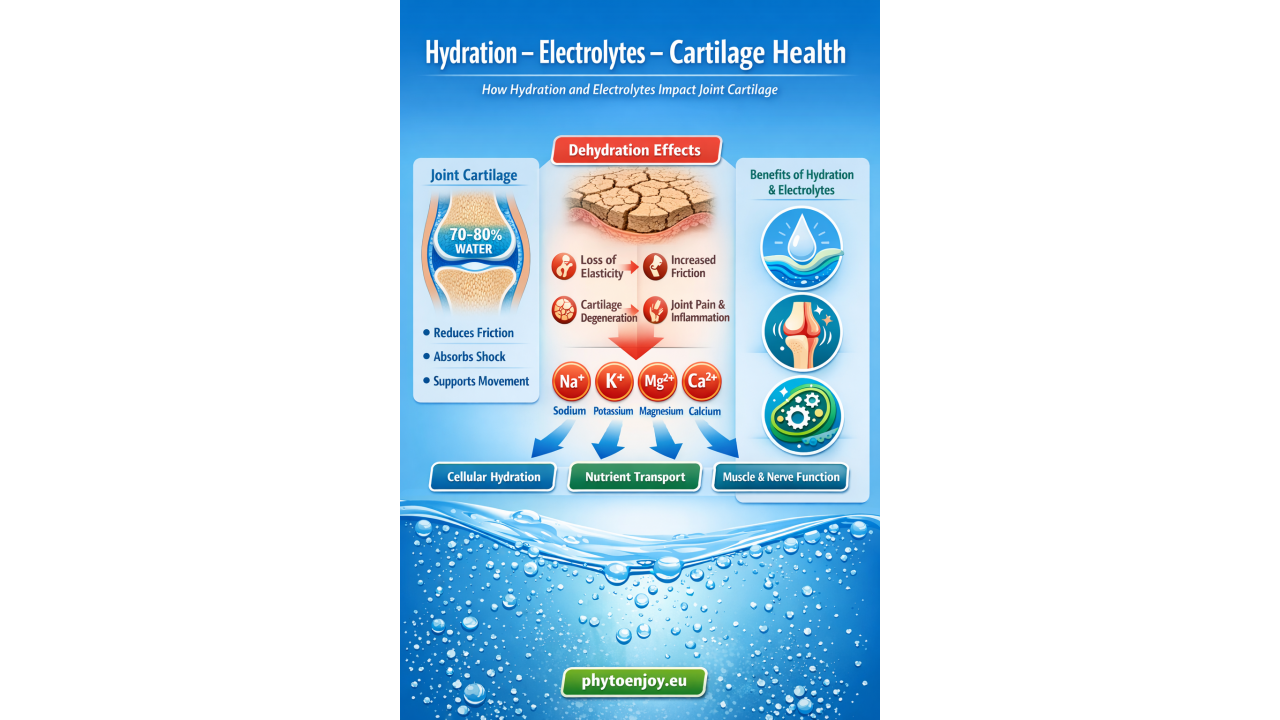
Approximately 70–80% of cartilage structure consists of water. This water is bound to molecules called proteoglycans, which retain fluid within the cartilage matrix.
Thanks to this structure, cartilage functions as a biological shock absorber that:
-
reduces friction between bones
-
distributes mechanical load
-
protects the joint from damage
When cartilage loses part of its water content, its elasticity decreases and it becomes more vulnerable to mechanical damage.
Dehydration as a Factor in Joint Degeneration
Chronic dehydration may gradually lead to reduced hydration of joint cartilage.
This can trigger several unfavorable processes:
-
decreased cartilage elasticity
-
increased friction in the joint
-
greater mechanical stress on the joint
-
accelerated degeneration of joint tissue
Long-term dehydration can also affect the composition of synovial fluid, which plays a key role in lubricating and nourishing the joint.
Synovial fluid contains water, electrolytes and nutrients that support the metabolism of chondrocytes.
The Role of Electrolytes in Joint Health
Electrolytes are minerals that participate in regulating osmotic balance and cellular metabolism.
The most important electrolytes in the human body include:
-
sodium
-
potassium
-
magnesium
-
calcium
These minerals are essential for:
-
cellular hydration
-
nerve conduction
-
muscle function
-
enzymatic reactions
-
energy metabolism
When electrolyte balance is disturbed, the osmotic equilibrium within tissues may also be disrupted, which affects the water content of cartilage.
This may lead to:
-
reduced cartilage hydration
-
impaired cellular metabolism
-
accelerated degeneration of joint tissue
Marine Plasma as a Natural Source of Electrolytes
One natural source of minerals and electrolytes is marine plasma, a concentrated form of seawater rich in trace elements and minerals.
Marine plasma contains a wide range of minerals, including:
-
sodium
-
potassium
-
magnesium
-
calcium
-
zinc
-
selenium
The mineral composition of marine plasma is similar to the mineral composition of body fluids, which allows the body to absorb these elements efficiently.
Due to its mineral profile, marine plasma may help support:
-
electrolyte balance
-
cellular hydration
-
normal cellular metabolism
Maintaining balanced mineral levels is an important factor for metabolic processes in joint cells and for maintaining the health of cartilage tissue.
Microcirculation and Joint Nutrition
Unlike many other tissues in the body, articular cartilage does not have its own blood supply.
Nutrients reach cartilage through diffusion from synovial fluid and surrounding tissues.
When microcirculation is impaired, the following problems may occur:
-
reduced oxygen delivery
-
decreased transport of nutrients
-
accumulation of metabolic waste products
These factors may lead to impaired metabolism of chondrocytes and progression of degenerative processes in the joint.
........................................
How can we support the body?
When dehydration and electrolyte imbalance are part of the problem, the first step is to focus on adequate hydration and the intake of minerals and electrolytes.
As part of a daily routine, Quinton Hypertonic can be used – for example, 1 ampoule diluted in 1 litre of water, to be consumed gradually throughout the day.
For additional nutritional support for the joints, cartilage and connective tissue, OstarthroN may be included according to the product’s recommended intake.
When additional support is needed for joint discomfort and pain, the regimen may be supplemented with Turmeric Max, containing turmeric/curcuminoids.
Mitochondrial Function and Cellular Energy
Mitochondria are cellular structures responsible for producing energy in the form of ATP (adenosine triphosphate).
This energy is essential for:
-
collagen synthesis
-
maintenance of cartilage matrix
-
tissue regeneration
When mitochondrial function is impaired, cells may suffer from energy deficiency.
This may result in:
-
reduced activity of chondrocytes
-
decreased collagen production
-
accelerated cartilage degradation
Oxidative Stress and Joint Damage
Oxidative stress occurs when reactive oxygen species (ROS) accumulate in the body.
These molecules can damage:
-
cell membranes
-
proteins
-
DNA
-
mitochondria
In joints, oxidative stress can stimulate inflammatory processes, which accelerate cartilage destruction.
The Importance of Hydration and Metabolic Balance
Maintaining proper hydration and electrolyte balance can be an important factor in joint health.
This includes:
-
adequate water intake
-
balanced nutrition
-
maintaining mineral balance
-
regular physical activity
These factors support the normal metabolism of joint cells and the structural integrity of cartilage.
Conclusion
Osteoarthritis is a complex condition that involves not only mechanical wear of the joints but also metabolic and cellular disturbances.
Dehydration, electrolyte imbalance, impaired microcirculation and mitochondrial dysfunction may play an important role in the development of degenerative processes in joint cartilage.
Understanding these mechanisms allows a more comprehensive approach to supporting joint health and preventing degenerative joint diseases.
Leave a Comment