
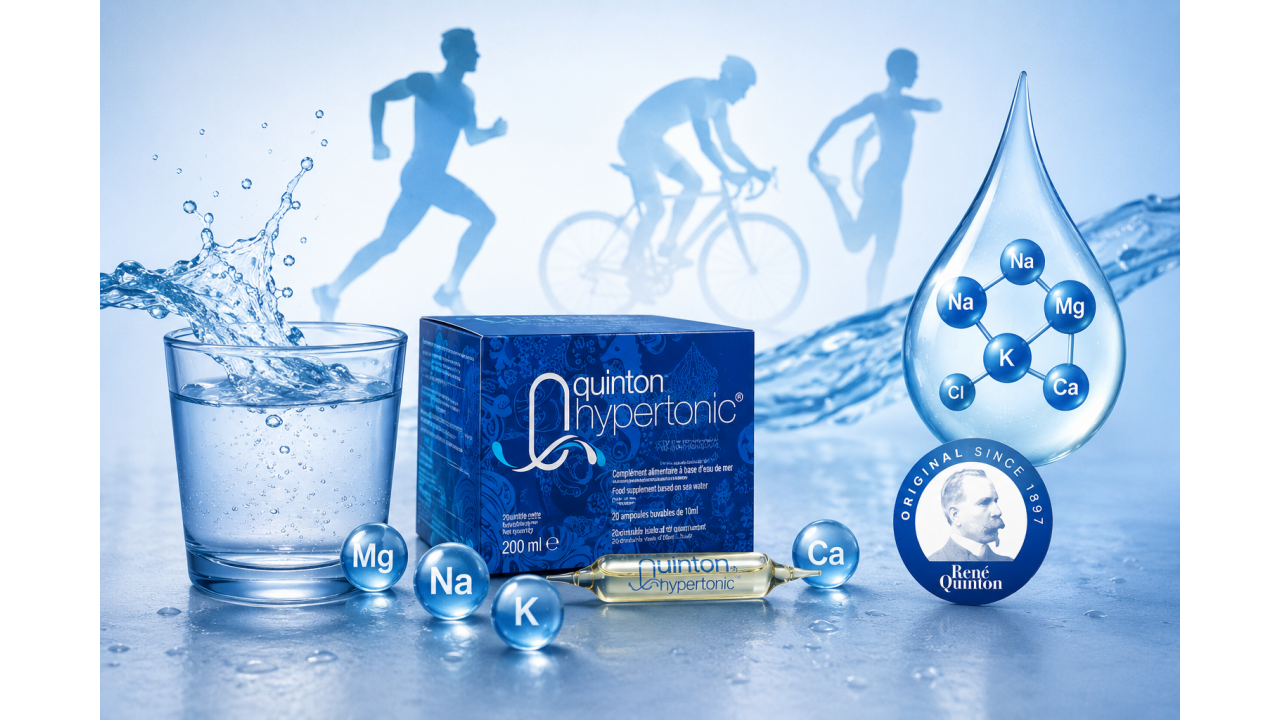
Minerals and Electrolytes – What Is the Difference and Why Are They Important for the Body?
Minerals and electrolytes are often mentioned together, especially when we talk about hydration, physical activity, fatigue and recovery.
However, minerals and electrolytes are not exactly the same thing.
Some minerals can function as electrolytes in the body when they are dissolved in body fluids in the form of electrically charged particles – ions.
This distinction is important because electrolytes are directly involved in regulating fluid balance, nerve impulses, muscle contractions and normal cellular function.
What Are Minerals?
Minerals are inorganic nutrients that the body needs for the normal functioning of numerous physiological processes.
Unlike some organic substances, the human body cannot “produce” the mineral elements it needs. They must be obtained through food, water and, when necessary, dietary supplements.
Minerals are involved in:
- building and maintaining bones and teeth;
- normal muscle function;
- normal functioning of the nervous system;
- enzymatic reactions;
- energy metabolism;
- the formation and function of blood cells;
- antioxidant protection;
- maintaining normal fluid and electrolyte balance.
Some of the best-known mineral elements include calcium, magnesium, sodium, potassium, phosphorus, iron, zinc, copper, manganese, iodine and selenium.
However, not all of them are commonly classified as major electrolytes.
What Are Electrolytes?
Electrolytes are substances that, when dissolved in water, form electrically charged particles – ions.
In the human body, they are found in the blood, inside the cells and in the fluid surrounding them.
The main ions associated with electrolyte balance include:
- sodium (Na⁺);
- potassium (K⁺);
- magnesium (Mg²⁺);
- calcium (Ca²⁺);
- chloride (Cl⁻);
- bicarbonate (HCO₃⁻);
- phosphate ions.
Their electrical charge is essential for normal cellular function.
Minerals and Electrolytes – What Is the Difference?
The easiest way to understand the difference is as follows:
“Mineral” refers to the mineral element as a nutrient, while “electrolyte” describes charged particles in solution that participate in the body’s electrical and fluid-balance processes.
For example, sodium, potassium, calcium and magnesium are mineral elements. In body fluids, their ions participate in electrolyte balance.
On the other hand, iron, zinc and selenium are also essential mineral nutrients, but they are not usually what we mean when talking about everyday hydration and electrolyte replenishment.
Therefore, the two terms are related but are not interchangeable.
Why Are Electrolytes So Important?
The body is a complex system in which water and the ions dissolved in it must be maintained within certain ranges.
Electrolytes are involved in several essential processes.
1. Fluid and Electrolyte Balance
Sodium and potassium are particularly important for the distribution of fluids between different compartments in the body.
The body continuously regulates the concentration of these ions to maintain normal fluid volume and normal cellular function.
This is why good hydration is not determined solely by how much water we drink.
2. Nervous System
Nerve cells communicate through electrical and chemical signals.
The movement of ions such as sodium, potassium and calcium across cell membranes is a fundamental part of generating and transmitting nerve impulses.
Therefore, electrolyte balance is directly related to normal nervous system function.
3. Muscle Function
Muscle contractions also depend on the proper movement and concentration of certain ions.
Particularly important are:
sodium → potassium → calcium → magnesium.
They participate in the processes that allow muscle cells to contract and relax normally.
4. Acid-Base Balance
The body maintains blood pH within a very narrow physiological range.
Various buffer systems and ions, including bicarbonate and phosphates, are involved in this process.
This balance is regulated primarily by the lungs and kidneys.
Water or Electrolytes – Which Is More Important?
It is not a choice between one or the other.
The body needs both water and a proper electrolyte balance.
Under normal daily conditions and with a balanced diet, many people obtain the electrolytes they need through food and fluids.
However, there are situations in which the loss of water and electrolytes may increase significantly.
These include:
- intense physical activity;
- prolonged or heavy sweating;
- high temperatures;
- vomiting;
- diarrhoea;
- certain medical conditions;
- the use of some medications.
In these situations, the body may lose both water and electrolytes.
Can We Drink a Lot of Water and Still Disrupt Electrolyte Balance?
Yes.
Although water is essential for life, excessive water intake over a short period of time is also undesirable.
If a very large amount of water is consumed relative to the body’s ability to excrete it, the concentration of sodium in the blood may fall excessively – a condition known as hyponatremia.
This demonstrates why the principle “the more water, the better” is not correct.
The goal is not maximum water intake, but rather maintaining an appropriate fluid and electrolyte balance.
How Do We Lose Electrolytes?
Every day, we lose water and electrolytes through:
- urine;
- sweat;
- stool;
- and, to a lesser extent, breathing.
Under normal conditions, the body has highly effective mechanisms for regulating these losses.
However, during heavy sweating, physical activity, hot weather or gastrointestinal fluid loss, the need to replenish fluids and electrolytes may be greater.
What Happens During an Electrolyte Imbalance?
An electrolyte imbalance means that the concentration of one or more electrolytes in the body is outside the normal physiological range.
Depending on the cause and the specific electrolyte involved, different symptoms may occur, including:
- weakness;
- fatigue;
- muscle cramps or spasms;
- headache;
- nausea;
- changes in heart rhythm;
- confusion in more severe cases.
It is important to understand that these symptoms are not specific to electrolyte imbalance and may have many other causes.
Significant electrolyte disturbances require medical assessment and, when necessary, laboratory testing.
Hydration Begins with Balance
We often think of hydration simply as drinking a certain amount of water each day.
Physiologically, the process is much more complex.
Normal hydration depends on:
water + electrolytes + kidney regulation + hormonal control + normal cellular function.
The kidneys continuously regulate how much water and electrolytes are retained and how much is excreted.
This is one reason why individual water and electrolyte requirements vary according to temperature, diet, physical activity and health status.
What Is the Role of Sodium?
Sodium is the main electrolyte in extracellular fluid.
It is involved in:
- maintaining fluid balance;
- nerve impulses;
- normal muscle function.
The body regulates its concentration very precisely.
Both insufficient and excessive amounts can be problematic, which is why sodium intake should be considered in the context of the overall diet and individual health status.
What Is the Role of Potassium?
Potassium is found primarily inside the cells and is essential for their normal function.
It contributes to:
- normal neuromuscular function;
- maintaining normal blood pressure;
- normal muscle function.
The balance between sodium and potassium is particularly important for normal physiology.
What Is the Role of Magnesium?
Magnesium is a mineral involved in hundreds of enzymatic reactions in the body.
It contributes to:
- normal energy-yielding metabolism;
- normal functioning of the nervous system;
- normal muscle function;
- electrolyte balance;
- reduction of tiredness and fatigue.
Therefore, magnesium is important far beyond the subject of muscle cramps, with which it is often associated.
What Is the Role of Calcium?
Calcium is well known for its role in maintaining bones and teeth, but its functions are not limited to them.
Calcium ions are involved in:
- normal muscle function;
- normal neurotransmission;
- normal blood clotting;
- normal energy-yielding metabolism.
This is another example of how a mineral can have both structural and electrophysiological functions.
Minerals, Electrolytes and Cellular Hydration
Cellular hydration depends on the movement of water and dissolved substances across cell membranes.
The differences in the concentrations of various ions inside and outside the cell are particularly important.
This carefully regulated balance allows cells to maintain their normal volume and perform their functions.
Therefore, hydration is not simply about “getting water into the cells”, but rather a dynamic physiological process regulated by multiple systems in the body.
Seawater as a Natural Source of Minerals
Seawater contains a variety of dissolved mineral ions and trace elements.
This principle is also behind marine plasma products, in which processed seawater is used as a source of minerals.
One of the best-known approaches is associated with QUINTON marine plasma.
QUINTON Hypertonic is a marine plasma containing naturally occurring minerals and trace elements.
When using such products, it is important to follow the recommended directions for use and take individual needs into consideration.
When Should We Be Careful with Electrolytes?
More electrolytes do not necessarily mean better hydration.
Particular caution is necessary for people with:
- kidney disease;
- heart failure;
- sodium or potassium abnormalities;
- high blood pressure when sodium restriction is required;
- use of diuretics or medications that affect electrolyte balance.
In such cases, the use of electrolyte products or mineral supplements should preferably be discussed with a healthcare professional.
In cases of vomiting or diarrhoea, especially in children and older adults, significant fluid loss may require a standardised oral rehydration solution rather than an arbitrary mineral or electrolyte drink.
How Can We Maintain a Good Fluid and Electrolyte Balance?
In everyday life, the basics remain relatively simple:
- drink fluids regularly according to your individual needs;
- maintain a varied diet;
- include natural sources of minerals;
- pay greater attention to hydration during exercise and hot weather;
- replenish lost fluids after heavy sweating;
- avoid drinking excessive amounts of water over a short period;
- do not use high doses of minerals and electrolytes unnecessarily.
The needs of someone who spends the day in an office are different from those of an athlete, someone working in high temperatures or a person experiencing significant fluid loss.
What Is the Connection Between Dehydration and Electrolyte Imbalance?
The two conditions are related, but they are not synonymous.
Dehydration refers to an excessive loss of body water relative to intake, while electrolyte imbalance refers to abnormal concentrations of specific electrolytes.
In some situations, they may occur simultaneously, but this is not always the case.
For example, during prolonged heavy sweating, the body loses both water and sodium, as well as other electrolytes.
We explore this topic in greater detail in the article:
“Dehydration – at the Root of Many Health Problems”
Conclusion
Minerals and electrolytes are related, but they are not identical concepts.
Minerals are nutritional elements with various structural and physiological functions, while electrolytes are charged particles in solution that participate in vital electrochemical and fluid-balance processes.
Sodium, potassium, magnesium, calcium and chloride are among the most important participants in electrolyte balance.
They support normal nerve and muscle function and participate in maintaining the body’s fluid balance.
Therefore, good hydration should not be viewed solely as a question of “How much water do I drink?”, but as part of the broader balance between water, nutrition, minerals, electrolytes and the body’s individual needs.
1 Comments
The article’s clarification that only some minerals act as electrolytes, like sodium and potassium, helps explain why they’re highlighted in sports nutrition. It’s useful to see the distinction spelled out so clearly.
Leave a Comment